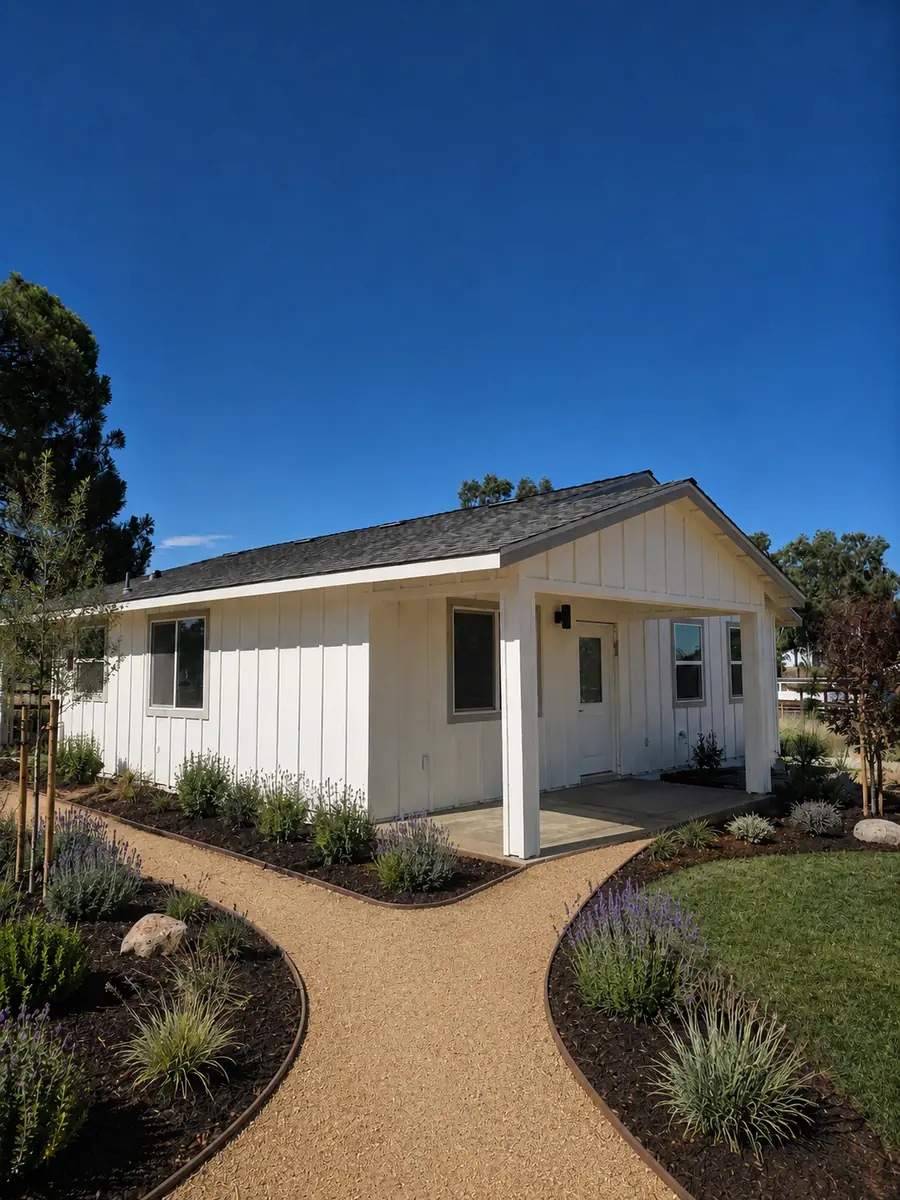
ADU Tax Implications California 2026
ADU Tax Implications California 2026 — quick facts
California ADU tax guide: Prop 13 reassessment rules, rental depreciation schedules, mortgage interest deduction and capital gains exclusion impact. A1 Building Contractors LLC is a veteran-owned, licensed general contractor serving the greater Sacramento region. Every project starts with a review of the property, the local jurisdiction and the homeowner's goals.
- Licensed California general contractor — CSLB #1094366, DRE #00898265.
- Veteran-owned and based in Roseville, serving Sacramento, Placer and El Dorado counties.
- Scope covers detached ADUs, attached ADUs, JADUs, garage conversions, home additions and custom homes.
- Plans, permits, plan check and construction are coordinated in-house for ADU Tax Implications California 2026.
- Typical detached ADU budgets run about $135K to $255K depending on size and site conditions.
Local guidance for ADU Tax Implications California 2026
A1 Building Contractors LLC helps Sacramento-area and Placer County homeowners evaluate design, permitting, site access, utilities, construction scope and realistic project costs before work begins. Each project is reviewed against the property, local jurisdiction and homeowner goals rather than a one-size-fits-all estimate.
For ADU Tax Implications California 2026, our team can explain practical options, likely approval steps and the tradeoffs that affect schedule and budget. Homeowners receive a clear path from initial feasibility through plans, permits and construction, with recommendations grounded in local building requirements and build conditions.
A productive first review considers available lot space, setbacks, access for construction, utility locations, desired square footage and long-term use. Those details help identify constraints early, compare appropriate project approaches and avoid spending on a design that does not fit the site or local rules. A1 then coordinates the applicable design and construction stages with clear decisions at each milestone.
ADU Tax Implications in California (2026 Guide)
Building an ADU triggers a partial property reassessment, unlocks meaningful depreciation deductions if you rent it, and changes how your home's capital gains exclusion works on sale. Here's the full 2026 tax picture, with the rules most CPAs only mention in passing.
- Reassessment: ADU value only (Prop 13 holds)
- Depreciation life: 27.5 years
- Effective tax rate (Sac): ~1.1% of added value
- 1031 eligibility: Rental ADUs only
Prop 13 and the partial reassessment rule
California's Proposition 13 caps annual property tax increases at 2% on existing improvements. When you build an ADU, the assessor does not reassess your entire property — only the new construction is added to the tax roll at current market rates. Practical impact: in Sacramento County (effective rate ~1.1%), an ADU that adds $135,000 of appraised value triggers approximately $1,485/year of new property tax.
Your primary residence's pre-existing low assessment is untouched.
Depreciation: the deduction most owners miss
If you rent your ADU, the IRS lets you depreciate the building (not the land) over 27.5 years on a straight-line basis. On a $250,000 build (excluding land), that's roughly $9,090/year of paper deduction against rental income — often enough to make the rental income tax-free for the first decade. You can also separately depreciate appliances and personal property over 5–7 years, and use cost segregation studies on larger projects to accelerate front-loaded deductions.
We refer clients to local CPAs who specialize in this — it's worth a paid consult before your first tax filing.
Mortgage interest deduction: what's deductible
Interest on the portion of your loan used to build a rental ADU is deductible against rental income on Schedule E. If the ADU is used personally (for family, guest house), interest may qualify for the home mortgage interest deduction up to the federal cap. HELOC interest is deductible only if the proceeds were used to substantially improve the property — building an ADU clearly qualifies.
Keep documentation: bank disbursement records, contractor invoices, and permit dates establish the linkage.
Capital gains and the home-sale exclusion on sale
The federal $250K (single) / $500K (married) primary-residence capital gains exclusion only applies to the portion of the property used as your primary home. If you rent the ADU, you'll allocate the gain on sale between the personal-use portion (qualifies for exclusion) and the rental portion (does not), based on relative square footage and time of use. Additionally, depreciation taken during the rental years is recaptured at 25% on sale — meaning every dollar of depreciation deduction must be paid back on sale unless rolled into a 1031 exchange.
This isn't a reason to skip depreciation — the time value of money still favors taking it — but it changes your sale-side tax math.
1031 exchanges: rental ADUs only
A rental ADU is investment property and qualifies for 1031 like-kind exchange treatment, letting you defer capital gains tax indefinitely by rolling proceeds into another investment property. The catch: only the rental portion qualifies. If you sell your primary residence with an ADU, you do a partial 1031 on the rental portion and a Section 121 exclusion on the primary portion.
Owner-occupied ADUs (used for family, not rented) do not qualify for 1031 treatment.
Frequently asked: ADU Tax Implications California 2026
The questions homeowners ask most about this topic, answered by a CSLB-licensed Sacramento builder.
- Will building an ADU trigger a full property tax reassessment? No. Under Proposition 13, only the value added by the new ADU is reassessed at current market rates. Your existing home's protected assessment is unchanged. In Sacramento County, an ADU that adds $135K of appraised value typically raises annual property tax by about $1,485.
- Can I depreciate my ADU for tax purposes? Yes — if you rent it. The IRS allows residential rental property to be depreciated straight-line over 27.5 years. On a $250K build (excluding land), that's about $9,090/year of deduction against rental income. Owner-occupied ADUs (used by family or as a guest house) cannot be depreciated.
- Is HELOC interest deductible when used to build an ADU? Yes, in most cases. If the HELOC proceeds were used to substantially improve the property, the interest qualifies as home acquisition debt under federal rules. If the ADU is rented, the interest is deductible against rental income on Schedule E. Keep clean documentation: HELOC disbursement records and contractor invoices.
- How does an ADU affect capital gains when I sell my home? If the ADU was rented, you allocate the gain between the primary-residence portion (qualifies for the $250K/$500K Section 121 exclusion) and the rental portion (does not). Additionally, depreciation taken during rental years is recaptured at 25% on sale unless rolled into a 1031 exchange.
How we deliver ADU Tax Implications California 2026
Every project runs through the same five-stage process, so you know what happens next and what it costs before construction starts. We handle design, engineering, jurisdictional plan check and construction under one contract, which keeps the schedule and the budget with a single accountable team.
- Stage 1 — Site walk and feasibility: setbacks, utilities, easements and lot coverage reviewed on site
- Stage 2 — Fixed-scope proposal: line-item pricing with permits, utility connections and finishes included
- Stage 3 — Design and engineering: architectural plans, Title 24 energy calcs and structural engineering
- Stage 4 — Permitting and plan check: submittal, corrections and approvals handled by our office
- Stage 5 — Construction and closeout: weekly updates, final inspection, certificate of occupancy and warranty
Why homeowners choose A1 for ADU Tax Implications California 2026
A1 Building Contractors LLC is a veteran-owned, CSLB-licensed general contractor serving the greater Sacramento region. We design, permit and build ADUs, garage conversions, home additions and custom homes across the Sacramento region, with transparent line-item pricing and a single point of contact from first site walk to final inspection.
- CSLB #1094366 General Contractor · DRE #00898265 Broker
- Serving Sacramento, Placer, El Dorado, Yolo and Sutter counties
- In-house design, permitting, plan check and construction
- Call (866) 797-7653 for a same-day callback